How Small Can a Workbench Be and Still Work?
A small workbench with a 32 x 18 in top can suit repairs, crafts, and compact tools when your projects fit the surface. Choose a wider bench for long stock, large assemblies, or a vise that needs more working room.
On this page (9 sections)
- How small can a small workbench be and still work?
- What fits on a 32 x 18 in small workbench?
- How much clear space does a small workbench need?
- When should you choose a wider small workbench?
- Does a small workbench need adjustable height?
- How do you set up a small workbench in a tight garage?
- What should you measure before buying a small workbench?
- What mistakes should you avoid with a small workbench?
- Which small workbench should you choose?
A small workbench can still work at 32 x 18 in for focused repairs, crafts, and compact tools, as long as your projects fit the top. For wider assemblies, long boards, or several tools at once, choose a larger surface.
Start with the biggest thing you expect to work on, not the space you hope the bench will occupy. A compact bench saves floor area, but the workpiece still needs room to sit flat, with space for your hands and tools to move.
How small can a small workbench be and still work?
A 32 x 18 in top is a useful minimum for many focused jobs. It gives you a defined surface for small repairs, craft work, or a few hand tools without taking up the footprint of a full-size bench.
That size is not enough for every task. A tabletop that fits a drill and a small part may not also fit the part, a vise, and the tools you need beside it.
Measure the largest project you plan to handle, including the space needed to hold or turn it. If it overhangs the top or blocks access to your hands, look for a wider or deeper bench.
What fits on a 32 x 18 in small workbench?
A 32 x 18 in bench suits work that stays within one compact working area. It can handle electronics, small repairs, craft projects, and tool setup when you work on one item at a time.
A small top works better when tools can stay off the surface. Drawers and pegboards keep frequently used items within reach, while adjustable height can suit seated or standing tasks.
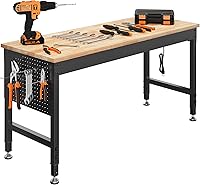
The TORACK has wheels, adjustable leveling feet, and upper and lower crossbars. Its frame is rated for a 1,000 lb load, but that capacity does not add working room: the top remains 32 x 18 in.
Skip this size for large assemblies or long stock that needs support at both ends. Compare workbenches with wheels if you need to move a bench, and see the rolling and adjustable workbench guide for more on mobile and height-adjustable setups.
How much clear space does a small workbench need?
Leave room for the workpiece, your hands, and the tools you need during the task. A bench can have enough area on paper but feel cramped if a vise, power tool, and parts fill the whole top.
Lay out your project before choosing a bench. Place the largest item where it will sit, then account for clamps or tools that must stay within reach.
Storage can preserve surface space, but check where it sits and whether it matches your workflow. A drawer is useful for small hand tools; a pegboard can keep frequently used tools visible and off the top.
When should you choose a wider small workbench?
Choose a wider bench when a compact work zone crowds your parts or tools. Extra surface area helps when you work with larger components, need several tools nearby, or want to use a vise without crowding the workpiece.
The IGERI has a 39.4 x 21.7 in work surface, a steel drawer, and a metal pegboard. Its 35 in working height and adjustable leveling feet may suit a garage where you want tools stored close to the bench.
Consider the IGERI if the extra width and tool storage would keep your main work area clearer. Skip it if your priority is the smallest floor footprint.
For wide assemblies or materials that need longer support, compare 60 inch workbenches. If you are deciding between a sturdier bench and a lighter-duty surface, read workbench vs. work table.
Does a small workbench need adjustable height?
An adjustable bench helps when you switch between seated and standing tasks or share the work area. Changing the surface height can make one bench more comfortable for different jobs and users.
The WALMANN is a 32 x 18 in model with height adjustment from 28 to 38 in. Its rubberwood top is reversible, and the steel frame has crossbars and adjustable feet pads.
The WALMANN and TORACK have the same top dimensions, so height adjustment does not create room for a larger project. Choose the WALMANN if you want its 1,500 lb rated capacity and reversible top; choose the TORACK if wheels are useful for moving the bench.
A larger adjustable option is the Northsky, with a 48 x 24 in top and a 28 to 43.4 in height range. It also has pegboards on both sides and a built-in power station with four AC outlets and two USB ports.
Choose the Northsky when a compact top would limit your work and you can spare the floor space. For a closer look at height ranges and bench styles, use the guide to adjustable workbench types.
How do you set up a small workbench in a tight garage?
A small workbench fits a tight garage when its full footprint leaves a clear path and enough working room. Measure the bench area and account for drawers, doors, nearby storage, and the space needed to carry materials to the top.
Assemble the bench on a flat area and follow its instructions. Tighten the fasteners, set adjustable feet on uneven floors, and check the frame for rocking before placing tools or workpieces on it.
Set the height before you settle into a task. For a rolling bench, secure it in position and confirm it stays steady before applying force; move it only when the work surface is clear.
What should you measure before buying a small workbench?
Measure the work area, your largest project, and the bench's full footprint. Include room to stand or sit, open a drawer, and move around the workpiece.
Check the top dimensions separately from the full bench dimensions. The top tells you how much working area you get, while the footprint shows how much floor space the legs and storage occupy.
Also check the height range and whether wheels, leveling feet, or storage suit your setup. If the bench must be stored between projects, compare folding workbench options.
What mistakes should you avoid with a small workbench?
The biggest mistake is choosing by floor footprint alone. A bench that fits the corner may still be too small for your workpiece, clamps, and tools.
Do not treat a load rating as a measure of useful surface area. A high capacity does not mean a small top can safely support an awkward, overhanging project, and it does not make a crowded setup easier to use.
Avoid leaving a rolling bench unsecured during forceful work. Keep the surface clear of loose tools, check the feet or wheels before starting, and store heavy items where they will not tip or obstruct the work area.
Which small workbench should you choose?
Pick a 32 x 18 in small workbench when your tasks are compact, your tools fit around the workpiece, and floor space matters most. The TORACK adds wheels, while the WALMANN offers a reversible top and the higher stated load capacity.
Choose the IGERI if you want more surface area with a drawer and pegboard. Move up to the Northsky when you need a 48 x 24 in top, a wider height range, or built-in power for tools and devices.
Measure the actual work before buying. If a project needs room for a vise, clamps, or long materials, choose a larger bench and read how to choose a folding workbench if storage space is also tight.
Frequently asked questions
How small can a workbench be?
A 32 x 18 in top can suit focused tasks such as small repairs or craft work. It can also keep a few tools close by.
It may feel cramped for large parts, long boards, or jobs that need a vise and open space around the work.
Measure your largest project before choosing.
Is a 32 x 18 workbench big enough?
A 32 x 18 in bench is enough when the workpiece and the tools you use at the same time fit on the top. It can be a practical choice for a small garage corner or a dedicated task.
Choose a wider or deeper bench when parts overhang or tools crowd the work area.
What is a good workbench height for a small space?
The right height depends on whether you stand or sit and on the task. Fine, close work may feel better with a higher surface, while forceful work often calls for a lower one.
Adjustable legs can help you set the bench for your posture.
Check the range before you buy.
Do small workbenches need wheels?
Wheels help if you need to move a bench between tasks or clear floor space, but they add a stability decision. Check whether the wheels lock and whether the bench has leveling feet.
Make sure it stays steady before applying force.
A fixed bench may suit heavy, stationary work better.