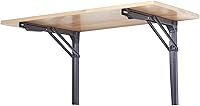
What Kind of Wood for a Workbench Top?
Hard maple is the best all-round wood for a workbench top because it is hard, dense and takes dents without splintering. Birch and rubberwood are good lower-cost steps down, and pine or plywood suit light-duty benches where you mostly want a flat, affordable surface.
On this page (10 sections)
- Why hardness is the first thing to compare in workbench top woods?
- What kind of wood for workbench top works best for most home shops?
- When does pine make sense for a bench top?
- How do plywood and MDF compare for a bench top?
- Which wood suits a heavy-duty hand-tool bench?
- How thick should the top be, and how does thickness change the wood choice?
- What do solid wood butcher block tops offer over boards and slabs?
- Which ready-made wood tops fit each kind of bench?
- How should you finish and care for a wood bench top?
- What kind of wood for workbench top fits your shop?
Hard maple is the best all-round wood for a workbench top. It is hard, dense and takes years of dents without splintering.
That answer only goes so far. The right wood depends on what you plan to do on the bench and what your budget allows.
A carving bench and a glue-up table want different surfaces.
This guide compares the main wood choices by hardness, stability, cost and how each behaves under real shop work. You'll finish knowing which wood suits your bench.
Why hardness is the first thing to compare in workbench top woods?
Hardness tells you how well a wood resists dents from dropped tools, mallet strikes and sliding workpieces. The harder the wood, the longer the surface stays flat.
The usual measure is the Janka rating, which records the force needed to drive a steel ball halfway into the wood. It's not the whole story, but it's the best single number for comparing species.
A soft top like pine marks up quickly, and every dent lets a workpiece rock or a clamp sit unevenly. Over the years, a flat bench turns lumpy.
Harder woods also hold dog holes better. Softwood wallows and wears oval under bench dogs and holdfasts, while dense hardwood keeps the hole crisp for far longer.
Hardness has a cost, though. A very hard wood costs more, weighs more and is harder on your tools, so match it to the work instead of chasing the top number.
A bench for power-tool assembly and sanding doesn't need maple. A bench for hand planing and mallet work does.
Firm rule: if you'll swing a mallet or plane by hand on the top, choose a hard species; if the top is mostly a flat staging surface, a softer wood saves money.
What kind of wood for workbench top works best for most home shops?
Hard maple is the safest pick for most home shops, and birch is the practical second choice. Both are dense, stable and widely sold as ready-made tops.
Maple has a long history as a bench wood because it wears evenly, stays flat and takes a finish well. It also doesn't splinter badly when it dents, and Kreg describes its hardwood top as having hardness similar to maple.
Birch is a little softer and less uniform in color, but it glues up well and holds a finish. Butcher block birch is one of the most common bench-top slabs sold today.
The trade-off is mostly price and appearance. Maple costs more and looks plainer; birch costs less and often looks warmer.
Rubberwood sits just under birch. It's dense enough for a garage bench and takes stain easily, but it's usually sold as a finished top for a garage cabinet system rather than as a raw slab for hand planing.
Firm rule: for a bench you'll use for years of mixed work, buy maple if the budget allows and birch if it doesn't; both beat softwood for a working surface.
When does pine make sense for a bench top?
Pine makes sense for light-duty benches, portable setups and tight budgets, not for a bench that takes heavy mallet work. It's cheap, easy to cut and widely available.
The trade-off is softness. Pine dents under a dropped hammer and marks under a vise that's tightened hard.
Those dents are easy to fill and sand, but they build up over time.
On the plus side, pine is easy to work. You can cut it, drill it and shape it with basic tools.
A first bench built from construction-grade pine gets you building without a big spend.
It's also light. A pine top on a folding frame is far easier to move than a hardwood slab.
That matters for a bench that lives against a wall and comes out only when needed.
Pine tops suit a bench used for sanding, painting and light assembly. If your work is mostly clamping small parts and laying out projects, the softness won't hurt you.
Skip pine if you'll be chopping mortises or using a heavy vise on the edge. The top will show the wear fast.
Firm rule: choose pine for a first bench, a folding bench or a bench used for light assembly; move up to a hardwood the moment hand tools and mallet work become regular.
How do plywood and MDF compare for a bench top?
Plywood and MDF are the two common sheet-goods choices, and they behave very differently. Plywood is tougher and holds fasteners; MDF is flatter and cheaper but softer.
Plywood is made from glued wood layers. A thick plywood top, usually doubled up to reach 1-1/2 inches, makes a stiff, affordable surface.
It handles screws and clamps well and doesn't split easily at the edges.
MDF is made from fine wood fibers pressed into a dense sheet. It's smooth and flat, which makes it good for a layout or assembly table.
It dents and swells when wet, though, and it's heavy.
The choice between them depends on how the top gets used. For a light bench that takes screws and clamps, plywood wins.
For a smooth, flat table where you mainly lay out work, MDF is fine.
Our plywood vs MDF workbench top guide covers the full comparison. The short version: plywood for a working bench, MDF for a flat reference surface.
Either way, edge-band the top or frame it so the raw edges stay protected. Sheet goods need that support more than solid wood does.
Firm rule: pick plywood when the top needs to take screws and clamps; pick MDF only for a smooth, light-use surface and keep it away from moisture.
Which wood suits a heavy-duty hand-tool bench?
Hard maple or beech is the right answer for a heavy-duty hand-tool bench. These are the woods that survive planing, chopping and vise pressure.
Hand-tool work loads the top in ways power tools don't. A hand plane pushes hard against the surface.
A mallet strike on a chisel sends shock into the wood. A bench vise cranked tight pulls on the edge.
Maple and beech handle those loads without crushing. They also stay flat under the sideways force of planing, which keeps your work stable.
Mass matters as much as species. A thick, dense top absorbs shock instead of bouncing it back into the tool.
That's why hand-tool benches are often built from thick, heavy slabs.
If you can't get maple or beech, birch is a reasonable stand-in. It's a bit softer but still dense enough for most hand work.
The frame matters too. A heavy top on a light, wobbly base still rocks under planing.
Pair a hardwood top with a sturdy base, and read our workbench legs and frames guide.
Firm rule: for a hand-tool bench, choose maple or beech and build the base heavy enough to match; skip softwood tops and light folding frames.
How thick should the top be, and how does thickness change the wood choice?
A 1-1/2 inch top is the standard for a solid wood bench, and thicker tops stay flatter over longer spans. Thickness also affects which woods make sense.
A 1-1/2 inch maple or birch top is stiff enough for a bench up to about 6 feet long. Past that, the middle can flex under heavy work unless you add bracing.
Thin sheet-goods tops need support from below. A 3/4 inch plywood top on a frame works for light use, and doubling it to 1-1/2 inches makes it much stiffer.
Thicker tops add weight. A heavy top stays put during planing and doesn't creep across the floor, which helps on a fixed bench and hurts on a folding one.
Wood and thickness work together. A softer wood in a thick slab can still be stiff, while a hard wood in a thin sheet can still flex.
Choose the thickness for the span first, then the species for the surface. Measure your planned bench length before you buy, because a top that's too thin for its span will show a dip the first time you press down on the middle.
Firm rule: buy at least 1-1/2 inches of solid wood for a fixed bench, and add bracing or a thicker top once the bench runs past about 6 feet.
What do solid wood butcher block tops offer over boards and slabs?
A solid wood butcher block top gives you a flat, glued-up surface that's ready to use. That saves the gluing, planing and flattening work of building one from boards.
Butcher block is made from many narrow strips glued edge to edge. The strips run in one direction, so the top stays stable and resists warping better than a single wide board.
The gluing also spreads stress, so a dent or knot in one strip doesn't split the whole surface. That makes it more forgiving than a solid slab in everyday shop use.
Ready-made tops come already flat, which is the main draw if you don't own a planer and jointer. A flat reference surface is hard to build by hand, and buying one removes the hardest step.
The trade-off is cost and weight. A glued-up hardwood top costs more than a sheet of plywood, so plan how you'll move it onto the base.
For the look and durability of solid wood without the millwork, butcher block is the practical middle path. Our wood top workbench roundup compares ready-made options.
Firm rule: buy butcher block when you want a flat solid wood top without a jointer and planer; build from boards only if you have the tools and the time to flatten it yourself.
Which ready-made wood tops fit each kind of bench?
The three tops here cover the common bench jobs. They range from a compact hardwood bench top to a long birch slab and a garage cabinet top.
Match the top to the base you already have or plan to build.
Kreg Hardwood Bench Top: the best all-round solid wood choice
The Kreg top is the pick for most people who want a solid hardwood surface. It's a 1-1/2 inch thick butcher block top in a 24 x 32 inch size with dog holes already drilled.
Kreg says the hardwood has hardness similar to maple. The top is dent-resistant and scratch-resistant for everyday assembly and cutting, and it carries a protective surface coating for easy cleanup of glue, paint and stain.
The dog holes accept standard 3/4 inch bench dogs. That turns the top into a real clamping surface for sanding, routing and pocket-hole work.
The Kreg top has a 500 pound load capacity, so it's built to take real weight.
The footprint is modest, which makes it a good fit for a compact shop. It's designed to pair with a Kreg Universal Bench base.
If you're still choosing a base, our workbench kit or ready-made guide covers that decision.
Choose it for a compact hardwood bench where dog holes and a tough coating matter. Skip it if you need a long top for a large assembly area.
Unfinished Birch Butcher Block: the best large top for custom builds
The birch slab is the pick when you want a long top you can finish your own way. It measures 60 x 25 x 1.5 inches, enough for a full-length bench or a large desk-style build.
It arrives sanded and unfinished, so you choose the finish. Mineral oil, stain, paint or polyurethane all work, depending on whether the top will stay in a shop or move into a room.
The unfinished surface can be trimmed and drilled. That's useful when you need a non-standard size or want to add dog holes in your own layout.
Gracava packs it with reinforced corner protection so it arrives flat.
The 1-1/2 inch thickness matches the standard solid wood bench depth. Birch is a little softer than maple but still dense enough for most home-shop work.
Choose it for a custom or long bench where you want to control the finish and the size. Skip it if you want a top that's ready to use straight out of the box.
ClosetMaid ProGarage Workbench Top: the best garage cabinet top
The ClosetMaid top is the pick for a garage system built around base cabinets. It's a rubberwood top sized to sit over two ProGarage base cabinets.
ClosetMaid says the rubberwood finish is stain-resistant and scratch-resistant and easy to clean. That suits a garage bench used for general projects, tool storage and light repair work.
The top measures about 1 inch high by 53.6 inches wide by 18.2 inches deep. That's shallower than a typical woodworking bench, so it suits a storage-and-work station more than a hand-tool bench.
The ClosetMaid top has a 125 pound load capacity. It's meant to combine with the rest of the metal ProGarage collection rather than to stand alone on a custom frame.
Choose it for a garage storage wall where the top ties into matching cabinets. Skip it if you need a deep, heavy bench for hand tools.
How should you finish and care for a wood bench top?
Oil is the simplest finish for a working bench top, and a thin oil finish protects the wood while staying easy to repair. Film finishes look better but chip and need sanding.
Oil soaks into the wood instead of sitting on top. Scratches and dents don't flake a coating, so you can sand a small spot and re-oil it without stripping the whole top.
A hard film finish like polyurethane gives a smoother, sealed surface and resists glue and moisture better. A dropped tool can chip it, though, and repairing a chip means sanding back to bare wood in that spot.
The Kreg top arrives with a protective coating already on it, so cleanup is easier from day one. An unfinished top like the birch slab needs a finish before heavy use.
Whatever you choose, keep the top dry. Wipe up spills and don't leave wet rags or drinks sitting on bare wood.
Moisture warps and stains a top faster than any tool.
Re-oil when the surface starts to look dry or water stops beading. A quick coat takes minutes and keeps the top working for years.
Firm rule: oil a working bench top for easy repair; use a film finish only when you want a sealed look and don't mind sanding to fix chips.
What kind of wood for workbench top fits your shop?
The short answer again: hard maple for a working bench, birch for a budget hardwood, rubberwood for a garage cabinet top, and plywood or pine for light use. Match the wood to the work and the base you'll put under it.
If you want a solid top that's ready to use, the Kreg hardwood top is the pick for most compact shops. It brings the dog holes and the tough coating already in place.
For a long custom build, the birch slab gives you the size and the finish control.
The base matters as much as the top. A hardwood slab on a wobbly frame still rocks under a plane.
Read our workbench legs and frames guide and our workbench kit or ready-made comparison before you buy.
If you're still weighing sheet goods against solid wood, the plywood vs MDF workbench top guide settles that question. And when you're ready to compare finished tops side by side, our wood top workbench roundup puts the options in one place.
Decide the work first. The wood for your workbench top follows from there.
Frequently asked questions
What is the hardest wood commonly used for a workbench top?
Hard maple is the traditional choice and one of the hardest woods sold as a ready-made top. Beech, birch and rubberwood follow close enough for most home shops.
Density matters more than the name on the label, so compare the species against the jobs you plan to do.
Is plywood good enough for a workbench top?
Plywood makes a solid, affordable top when you need a large flat surface without spending much. A thick plywood top handles light assembly and cutting fine.
It dents and splinters more easily than solid hardwood under heavy mallet work, so it suits a lighter bench.
How thick should a workbench top be?
A 1-1/2 inch top is the common standard for solid wood benches and keeps the surface stiff over a wide span. Thinner tops around 1 inch suit smaller benches and light work.
Add bracing or a thicker top when the bench runs long and you plan to pound on it.
Should I seal or oil a solid wood workbench top?
Oil or a thin protective finish suits most workbench tops, because it protects the wood while staying easy to refresh after scratches. A hard film finish looks cleaner but chips and needs sanding to repair.
Keep the top dry and reapply the finish when the surface starts to look thirsty.
Does the wood species matter for gluing and clamping?
The wood matters less than having a flat, stable surface with a good finish. Open-grained hardwoods hold dog holes and holdfasts well.
A dense top keeps its shape around dog holes better than softwood, which can wallow under repeated clamping.