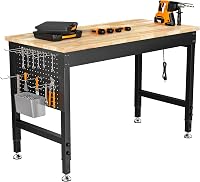
Workbench Organization Ideas to Clear a Cluttered Bench
Good workbench organization keeps the work surface open, small parts sorted, and everyday tools within reach. Choose drawers for covered storage, bins for quick visual access, and wall racks for hand or power tools.
On this page (8 sections)
- How do you organize a workbench without losing work space?
- Which workbench organization setup fits your tools?
- Are drawers or open bins better for small parts?
- How can you keep hand tools easy to reach?
- Where should power tools and chargers go?
- What mistakes make a workbench harder to use?
- How do you maintain an organized workbench?
- Which workbench organization ideas should you use first?
Good workbench organization keeps the work surface open, small parts sorted, and everyday tools within reach. Choose drawers for covered storage, bins for quick visual access, and wall racks for hand or power tools.
Start by clearing the bench and sorting everything into tools, fasteners, materials, and items that belong elsewhere. Then plan storage around the jobs you do most, rather than trying to give every item a place on the work surface.
How do you organize a workbench without losing work space?
Keep the center of the bench open and store tools around its edges, below it, or on a wall. That leaves room to handle parts while keeping frequently used items close.
Sort items into three groups: daily tools, occasional tools, and supplies. Place daily tools within easy reach, store occasional tools in drawers or on a shelf, and move unrelated household items out of the work area.
Plan around your work, too. A repair bench benefits from a small, clear area for parts and hand tools, while woodworking often calls for more room to support pieces.
A lower shelf can hold cases and supplies that don't need to stay on top. See what to consider in our guide to a workbench with a shelf.
Before adding storage, measure both the bench and the nearby wall. Check that drawers can open, bins are reachable, and wall-mounted tools won't get in the way of long pieces or moving handles.
Which workbench organization setup fits your tools?
Choose storage by item size, how often you use it, and whether you need to see it at a glance. Drawers suit small parts you want covered, bins suit parts you grab often, and wall holders keep selected tools visible.
For fasteners and other small items, separate groups by type and return them to the same place after each job. Labels such as “wood screws” or “washers” make it easier to scan for what you need.
Avoid mixing unrelated parts in one container just because it has room.
A useful setup doesn't have to be elaborate. Start with the items that most often clutter the top, then add storage only where a clear category or repeated task calls for it.
Are drawers or open bins better for small parts?
Use drawers when you want covered storage and open bins when visibility and quick access matter more. The best choice depends on the parts you keep and how often you reach for them.
The Akro-Mils cabinet has 44 drawers and measures 20 in wide, 6 in deep, and 16 in high. Its dividers are molded into the back, its finger-grip pulls help with access, and keyhole slots allow wall mounting.
This cabinet suits a bench with many small fastener groups, craft supplies, or other compact items.
It can also sit on a countertop or stand on its own. Skip it if your main storage need is for large tools, bulky supplies, or items you want to grab without opening a drawer.
Use its larger drawers for parts that need more room and smaller drawers for compact groups. Don't fill every drawer with a mixed assortment; a cabinet only saves search time when each group has a consistent place.
For parts you reach for repeatedly, open bins can make the contents easier to spot. The VEVOR rack includes 24 small bins, 24 large bins, and 4 wall panels, giving you two bin sizes for sorting different items.
The rack suits a wall where you can arrange bins near the work area and see what each one holds. Skip it if you don't have room for a wall panel or need covered storage to keep dust off the contents.
Measure the wall before mounting it, and place bins where you can reach them without leaning across active work. Use a consistent grouping and label each bin; otherwise, visibility alone won't prevent a jumble.
How can you keep hand tools easy to reach?
Put commonly used hand tools where you can see and grab them without crowding the bench. A magnetic strip can help when your tools suit magnetic storage and the wall beside the work area can support a secure mount.
The HMmagnets set includes four 12 in holders, for 48 in of total strip length. Screws and anchors are included for wall mounting, while pegboard mounting material is not included.
This set suits a workshop with several metal hand tools that are used often and currently take up drawer or bench space. Skip it if the tools you need to store aren't compatible with a magnetic holder, or if the available wall or pegboard setup won't support the required installation.
Arrange tools by task or type, then put the most-used ones at a comfortable height. Leave enough space between tools to remove one without knocking its neighbors.
Keep the strip away from spots where a tool could interfere with a workpiece or get bumped during a job.
If you want a wider mix of storage and setup ideas, our guide to workbench accessories covers other add-ons that may help with common jobs.
Where should power tools and chargers go?
Store bulky power tools off the work surface when you're not using them. A wall rack can keep tools and charging equipment near the bench while leaving the top open.
The POKIPO organizer has 4 tiers, 6 shelves, 8 drill slots, side racks, and a hook rack. It also has a 4-outlet power strip with a 6.5 ft cord and a stated load capacity of 600 lb.
This rack suits a garage bench with several drills, chargers, and related tools that need a shared storage area. Skip it if you don't need the shelf and drill-slot capacity, or if you can't place it where the cord can reach an outlet.
Plan the layout before mounting the organizer. Check that the charging area won't block your work and that the cord can reach.
Make sure tools can be removed without catching on nearby items. For more on combining storage and outlet access, read our guide to workbenches with power strips.
What mistakes make a workbench harder to use?
The most common mistake is filling every available surface before deciding what needs to stay close. That leaves tools competing with the project for the same space.
Avoid mounting storage where it blocks a drawer, shelf, or tool movement. Don't put frequently used items high above the bench or far from the work area just because a spot is empty.
Also avoid storing heavy or bulky tools in small-parts containers that weren't meant for them.
A cluttered bench can come back even after a thorough cleanup if items don't have assigned places. Give each category a clear home and adjust the arrangement when you find yourself repeatedly setting the same tool or part on the top.
How do you maintain an organized workbench?
Reset the bench after each job and adjust storage when your habits change. A short cleanup makes it easier to start the next task with usable space.
Return loose fasteners to their labeled drawers or bins, put tools back in their assigned spots, and move scrap and packaging out of the work area. Keep only fixed equipment and useful everyday items on the surface.
Check that wall storage remains easy to reach and doesn't obstruct the work area. If parts are hard to find, refine the labels or separate mixed groups; if a tool keeps landing on the bench, move its storage closer.
Which workbench organization ideas should you use first?
For practical workbench organization, start with a clear top, then choose separate storage for parts, hand tools, and power tools. Pick drawers for covered small-part storage, open bins for visible groups, magnetic strips for compatible hand tools, and a wall rack when several power tools and chargers need a home.
Choose only the storage that solves a recurring problem in your workspace.
Measure before mounting anything, keep everyday items within reach, and leave enough open surface for the next job. For a broader look at bench construction and frame details, see the metal workbench buying guide.
Frequently asked questions
How do I organize a workbench?
Clear the work surface, sort items by how you use them, and assign storage for small parts, hand tools, and power tools. Keep frequently used items near the bench and leave an open area for the current job.
At the end of each project, return tools and parts to their assigned places.
If the same items keep collecting on the bench, move their storage closer or make the labels clearer.
What should I keep on a workbench?
Keep only fixed equipment and the tools or materials you use often on the bench. Store spare fasteners, cases, chargers, and tools for occasional jobs in drawers, bins, or wall storage.
Leave enough open surface to handle the work you do.
A repair bench and a woodworking bench need different amounts of clear space.
Are magnetic strips good for workbench organization?
Magnetic strips can keep compatible metal hand tools visible and easy to reach. They suit tools such as screwdrivers, pliers, and wrenches when the strip is mounted securely and placed where the tools won't interfere with the work.
Use drawers or pegboard storage for tools that don't sit securely on a magnet.
Check the mounting surface and follow the strip's installation directions.
Should I use bins or drawers for workbench parts?
Drawers are useful when you want small parts covered and separated in one cabinet. Open bins make contents easier to spot and grab, especially when you sort parts by type and keep the bins within reach.
Choose based on what you store, how often you reach for it, and whether you have suitable wall or bench space.
Labels help parts return to the right place.